Used Oil Management
Used Oil Management
About Used Oil
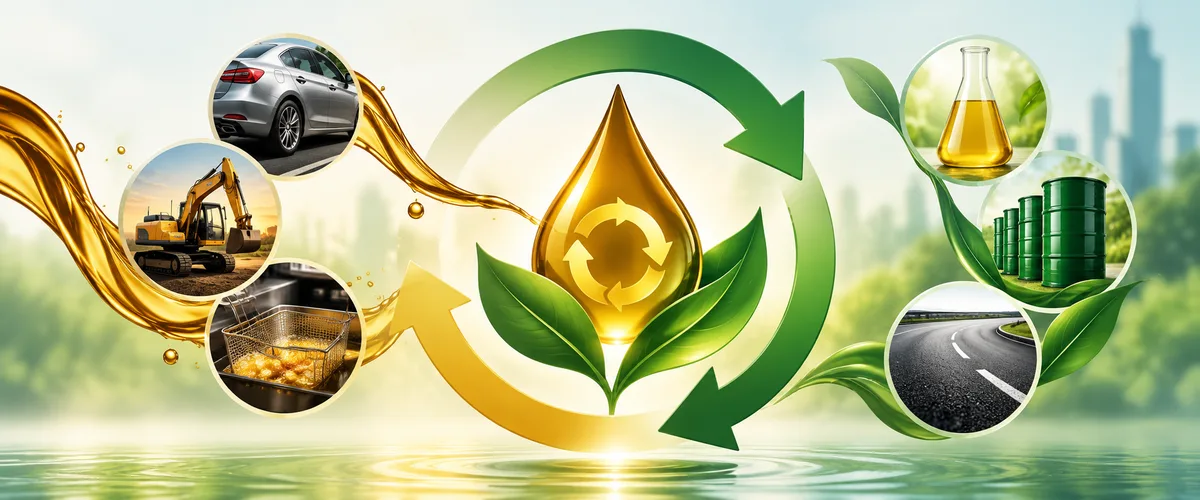
Used oil is oil that has already been used for its intended purpose and is no longer fit for the same use. It can include Used Lubricating Oil (ULO) generated from vehicles, engines, machines and industrial equipment, as well as Used Cooking Oil (UCO) generated after cooking or frying in homes, restaurants and food businesses. In simple terms, it is oil that has completed its original use and needs to be managed separately from fresh oil.
Sources of Used Oil
Used oil is generated in many places where oil is used regularly. Used Lubricating Oil (ULO) commonly comes from vehicles, engines, machinery, manufacturing units, workshops, generators, and industrial equipment. Once the oil has done its job and can no longer provide the same level of lubrication, it becomes used oil. Used Cooking Oil (UCO) comes from a different source - our kitchens and food businesses. Homes, restaurants, hotels, canteens, food manufacturers, and other commercial kitchens generate used cooking oil after frying and cooking. From a small workshop to a large industrial unit or a busy restaurant, used oil is generated every day. What matters is ensuring that it is recognised as a separate waste stream and handled through the right channels.
Reasons Why Used Oil Management Matters
Used oil may seem like something that has already served its purpose, but the way it is handled afterwards can have a lasting impact. Improper disposal of used lubricating oil can contaminate soil and water, while poorly managed used cooking oil can clog drains and create other waste-related problems. Responsible management helps keep used oil out of the environment and ensures it reaches the appropriate collection and recycling channels. It also allows valuable resources to be recovered instead of being lost as waste.
At RUOMF, we believe responsible used oil management is about more than protecting the environment. It is also about supporting the people who collect it, creating awareness, encouraging safer practices, and helping communities understand the role they can play in managing used oil better.
The Journey of Used Oil
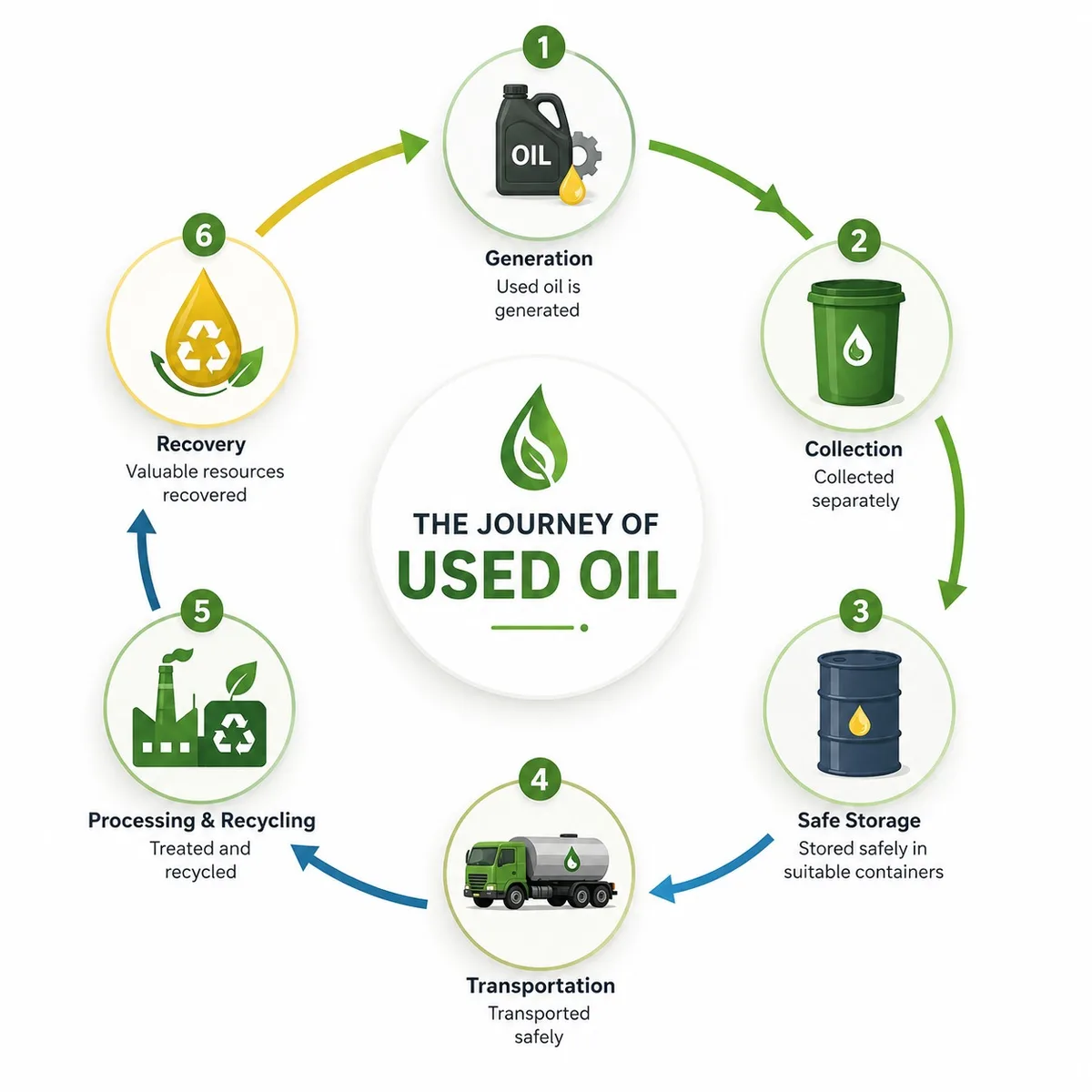
Generation: Used oil is generated after lubricating oil is used in vehicles, engines, machines, and industries, while used cooking oil comes from homes, restaurants, hotels, and food businesses.
Collection: Once the oil has served its purpose, it is collected separately instead of being poured into drains, soil, or mixed with regular waste.
Safe Storage: The collected oil is stored in suitable containers to prevent leaks, spills, contamination, and unnecessary exposure.
Transportation: Used oil is carefully transported through appropriate channels to ensure it reaches the right collection or recycling facility safely.
Processing & Recycling: At authorised facilities, the oil can undergo suitable treatment and recycling processes to remove contaminants and recover useful materials.
Recovery: Valuable components from used oil can be recovered and used again, giving the oil a second life instead of allowing it to become an environmental burden.
Safe Handling of Used Oil
Used oil collection is the first practical step towards managing it responsibly. Once oil has completed its original use, it should be collected separately and kept away from regular waste, water, drains, and open areas. Proper collection also helps prevent spills and unnecessary exposure during handling. Both Used Lubricating Oil (ULO) and Used Cooking Oil (UCO) need to reach the appropriate collection channels, although their handling and further processing requirements are different. Collectors play an important role in making sure the oil is picked up safely and moved through the right channels.
Good collection practices help keep used oil out of the environment and make sure that what can be recovered or recycled gets the opportunity to be put to further use.
Collector Safety
Used oil collectors are often the first people handling oil after it leaves a vehicle, machine, workshop, or business. Their work can involve spills, direct contact with oil, heavy containers, and other workplace risks, making basic safety practices especially important.
Using suitable protective equipment, handling containers carefully, avoiding direct contact with used oil, and following safe storage and transportation practices can help reduce these risks. Regular training and health check-ups can also help collectors understand the hazards associated with their work and take better care of themselves. At RUOMF, collector safety is an important part of responsible used oil management. Protecting the environment also means looking after the people who make responsible collection possible.
Partner With Us
Businesses across workshops, manufacturing, transport, hospitality, and other sectors generate used oil as part of their everyday operations. Managing it properly is not just about getting rid of it after use. Safe storage, collection, and responsible recycling can help reduce environmental risks and ensure that used oil is handled through the right channels. RUOMF works with businesses that want to take an active role in responsible used oil management. Through CSR partnerships, awareness programmes, employee engagement, collector support, and other initiatives, businesses can contribute to both environmental protection and the well-being of people working in the collection ecosystem.
Partner with RUOMF and be part of this effort. Whether you want to support a specific programme, involve your employees, or build a long-term CSR initiative, there are several ways to work together towards better used oil management and stronger communities.
Used Oil and Communities
Green Jobs Initiative - Supports skill development and livelihood opportunities for people who want to work in responsible used oil management.
Medical Check-up Camps Initiative - Provides basic health check-ups and health awareness for people involved in used oil collection and management.
Sponsor a Collection Vehicle - Supports safer and more organised collection and transportation of used oil.
Knowledge and Research Programme - Builds knowledge around used oil management, with a focus on safer collection practices and better understanding of the challenges involved.
Training for Used Oil Collectors - Provides practical training on safe collection, handling, storage, transportation, and workplace safety.
Safety Equipment Support - Helps used oil collectors access basic protective equipment and encourages safer working practices.
Community Awareness Campaigns - Helps communities understand the risks of improper used oil disposal and the importance of responsible collection and recycling.
School and College Awareness Programs - Educates students about used oil, responsible waste management, recycling, and environmental protection.
Environmental Compliance Awareness - Helps individuals and businesses understand the importance of following appropriate environmental practices while handling used oil.
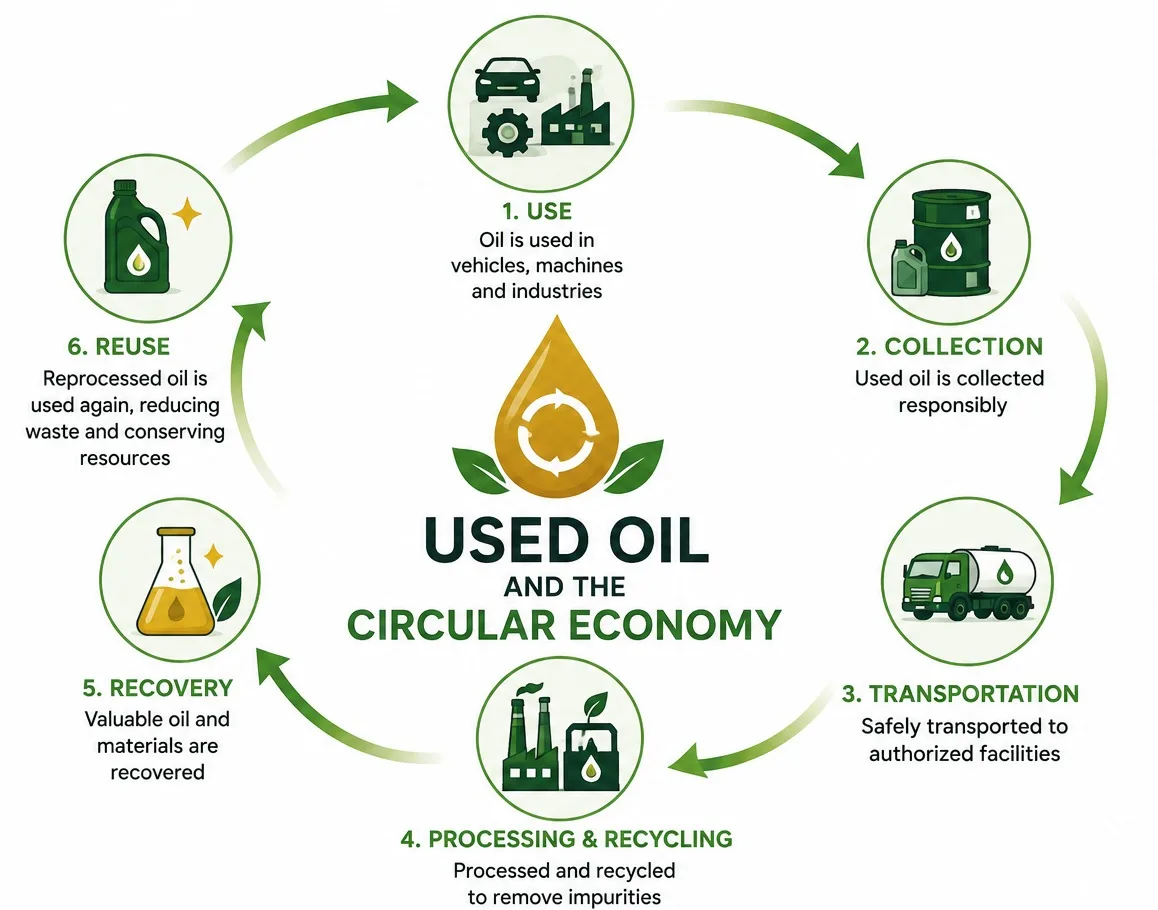
Circular Economy Education - Explains how used oil can be recovered and recycled, helping people understand the value of keeping resources in use.
Resident Welfare Association Engagement - Works with RWAs to encourage responsible used oil collection and better waste-management practices within residential communities.
Livelihood Enhancement Initiatives - Supports opportunities that can help people connected to the used oil ecosystem build safer and more sustainable livelihoods.
Corporate Sustainability & CSR Engagement - Provides businesses with opportunities to support environmental and community-focused initiatives through CSR partnerships.
Volunteer Programme – Community Outreach - Gives individuals an opportunity to participate in awareness, education, and community activities related to responsible used oil management.
RUOMF's Role in the Used Oil Ecosystem
RUOMF works at the point where people, communities, businesses, and responsible used oil management come together. Our role is to create awareness about the risks associated with used oil while supporting the people who collect and handle it at the grassroots level. Through training, health check-ups, safety support, community and school programmes, research, and CSR partnerships, we work to strengthen the people and practices connected to the used oil ecosystem. The aim is to make responsible collection safer, better understood, and more accessible.
RUOMF believes that a responsible system cannot focus only on where used oil goes. It must also look at the people who collect it, the communities around them, and the practices followed at every step.
Used Oil Management
Used Oil Management
Want to understand RUOMF better? Please do not hesitate to say a 'Hi' on whatsapp
+91 98300 88503 or email us at info@ruomfoundation.com or ruomfoundation@gmail.com or Contact us.
Used Oil Management